
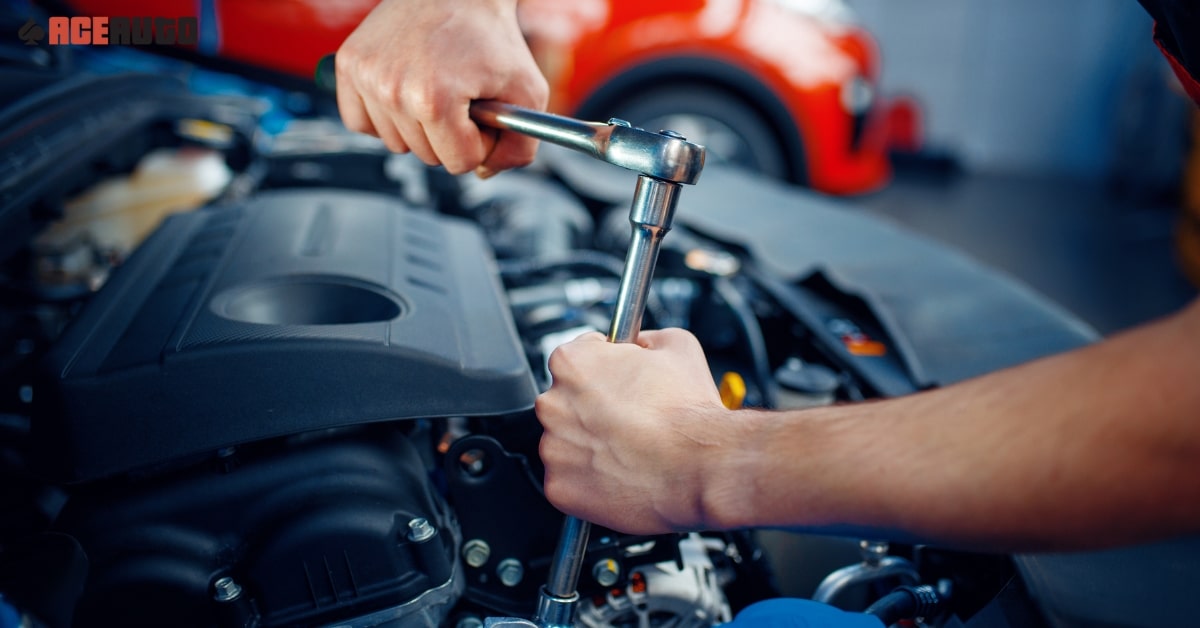

Auto repair shops follow a structured, evidence driven process when diagnosing engine problems. From the moment a vehicle rolls into the bay the technician combines customer information, visual and sensory inspection, electronic data, mechanical tests, and manufacturer resources to arrive at a reliable root cause. How Auto Repair Shops Diagnose Engine Problems is both a science and a craft: systematic procedures reduce guesswork while technician experience helps interpret complex symptoms.
Why a structured diagnostic process matters
A correct diagnosis prevents unnecessary parts replacement, reduces repair time, and protects warranty relationships. Modern engines have many interacting systems; what looks like a fuel problem may be caused by an ignition fault or a clogged catalytic converter. A structured approach preserves evidence, creates a defensible repair path, and minimizes repeat visits.
First contact: intake and customer interview
Technicians begin by asking targeted questions to recreate the problem mentally and focus tests. Effective intake covers:
- Detailed symptom description: When did the problem begin? Is it constant or intermittent? Under what conditions does it appear: cold start, warm idle, high load, cruising?
- Recent service history: Any recent repairs, oil changes, or parts replaced?
- Warning lights and messages: Which lights are on, and when did they illuminate?
- Noise and vibration descriptions: Where is the noise felt or heard? Is it rhythmic, metallic, or a whoosh?
- Fuel, oil, coolant usage: Any recent topping up or leaks?
This information narrows the likely systems (electrical, fuel, air, mechanical) and selects appropriate first-line tests.
Visual inspection and basic checks
Before electronic testing, technicians do a hands-on inspection to rule out obvious issues. This includes:
- Checking fluid levels and condition: oil color and smell, coolant level, fuel smell.
- Looking for visible leaks and broken vacuum hoses.
- Inspecting electrical connections and grounds for corrosion or looseness.
- Examining belts, pulleys, and accessory drives for wear that could affect performance.
- Confirming air filter condition and intake plumbing integrity.
Small findings here often explain bigger symptoms and can be corrected quickly.
Onboard diagnostics: reading codes and freeze frame data
Almost every modern vehicle supports standardized diagnostic access via the OBD-II port. Technicians connect a scan tool to retrieve:
- Stored and pending trouble codes that identify systems and circuit failures.
- Freeze frame data, a snapshot of engine operating parameters when a fault occurred.
- Live data streams such as engine speed, intake air temperature, throttle position, oxygen sensor voltages, mass air flow readings, and fuel trims.
Understanding trouble codes requires interpreting them in context. A code for a misfire indicates a cylinder misfire was detected; it does not tell you why. Freeze frame and live data narrow the possibilities and guide which physical tests to run next.
Live data analysis: patterns and correlation
Analyzing live data while replicating the complaint is crucial. Technicians watch fuel trim trends, sensor correlations, and response to throttle or load. Examples:
- Short term and long term fuel trims: Large positive trims suggest a lean condition; negative trims suggest rich running. Trends help localize vacuum leaks, MAF issues, or fuel delivery problems.
- Oxygen sensor and catalytic converter readings: A slow or stuck O2 sensor signal suggests sensor degradation or exhaust restrictions.
- Misfire detection by cylinder: Comparing misfire counters helps isolate a cylinder-specific problem like ignition or mechanical failure.
Advanced shops use graphing on the scan tool to see simultaneous waveforms, which often reveal subtle timing or sensor-sync issues.
Mechanical compression and cylinder health testing
When symptoms point to internal mechanical issues, compression and leak diagnostics are used:
- Compression test measures cylinder pressures to verify sealing of valves, rings, and head gaskets.
- Leak-down test pressurizes each cylinder and measures how much air is lost and where it leaves: past rings (into crankcase), past valves (exhaust or intake), or into the cooling system (head gasket).
- Cylinder contribution test compares power contribution per cylinder to reveal a weak cylinder under load.
These tests separate electrical/fuel issues from true mechanical failures.
Fuel system evaluation
Fuel delivery problems are diagnosed through pressure and flow tests and injector analysis:
- Fuel pressure test at the fuel rail to verify pump and regulator operation at idle and under load.
- Fuel volume and return flow checks for contaminants or pump wear.
- Injector balance or cylinder cut-out tests to check each injector’s contribution.
- Fuel quality checks for water, ethanol content, and contaminants.
Failures here can mimic ignition problems and produce running roughness or poor power.
Ignition system testing
Ignition faults remain a common source of misfires and poor running. Shops test:
- Spark quality and timing using spark testers and timing equipment.
- Coil-on-plug waveforms with an oscilloscope or advanced scan tool to detect coil or primary circuit issues.
- Plug condition and gap to infer fuel mixture and combustion characteristics.
- Ignition module and related wiring for intermittent faults.
Often, combining cylinder-specific misfire counts with ignition waveform analysis isolates a single coil or spark plug.
Air intake, vacuum, and exhaust diagnostics
Airflow and exhaust restrictions have direct effects on combustion. Common tests include:
- Mass air flow sensor (MAF) testing: comparing expected vs. actual airflow using live data.
- MAP sensor and manifold vacuum testing to detect leaks or intake manifold distortions.
- Smoke test for vacuum and intake leaks, where low-pressure smoke highlights hard-to-see cracks or disconnected hoses.
- Exhaust backpressure measurement to detect clogged catalytic converters or mufflers.
A small vacuum leak can cause high idle, lean fuel trims, and driveability issues, so technicians routinely check for these.
Advanced diagnostics: oscilloscopes and thermal imaging
High-end shops use specialized tools to see signals directly and measure heat:
- Automotive oscilloscopes reveal the real-time electrical waveforms of sensors, coils, and communication buses. Voltage shape, timing, and noise signatures are diagnostic gold.
- Thermal imaging helps detect hot cylinders, exhaust leaks, or friction points by comparing temperature patterns across components.
- Borescopes allow direct visual inspection inside combustion chambers and valves without disassembly.
These tools make complex intermittent issues diagnosable without needless teardown.
Emissions and catalytic converter checks
Performance problems sometimes originate in the exhaust and emissions systems:
- Oxygen sensor aging or slow responding upstream sensors cause poor fuel control and drivability.
- Catalytic converter restriction or failure creates backpressure that reduces power and increases temperatures.
- Evaporative emissions system (EVAP) faults cause rough starts or fuel odors and are diagnosed through smoke tests and pressure decay testing.
Shops evaluate both sensors and the catalytic substrate to determine if replacement or cleaning is needed.
Software and communication checks
Modern engines rely heavily on software. Symptoms can be caused by:
- ECU software bugs or calibration issues solved by manufacturer updates or reflashes.
- Module communication faults on CAN or LIN networks causing intermittent sensor or actuator readiness failures.
- Adaptive learning and reset effects where a module has “learned” incorrect values after a previous repair.
Technicians reference Technical Service Bulletins and OEM updates to ensure software is current before replacing hardware.
Diagnostic strategy and evidence-based repair planning
Good shops follow a “test before replace” philosophy. The diagnostic strategy typically follows these steps:
- Reproduce the symptom whenever possible, using safe conditions or a test drive.
- Gather data: scan codes, freeze frame, live data, and visual inspection.
- Form hypotheses: list the most probable causes and plan minimal invasive tests.
- Perform targeted tests: use appropriate tools to confirm or exclude causes.
- Repair the root cause and then verify with post-repair testing.
- Document findings and steps taken to aid future diagnostics and warranty claims.
Documentation also helps the shop explain the repair to the customer and justify labor and parts.
Dealing with intermittent faults
Intermittent problems are the hardest to diagnose. Shops use these techniques:
- Extended road tests replicating specific conditions reported by the customer.
- Data logging to capture long-term live data including freeze frames when faults occur.
- Physical stress tests such as heat application, vibration, or load to reproduce failures.
- Sensor substitution only when necessary and after other tests point to a suspect part.
Intermittent electrical issues often trace back to wiring harness chafing, corroded connectors, or thermal expansion effects.
OEM resources and technical bulletins
Manufacturer resources such as Technical Service Bulletins, wiring diagrams, and calibration updates are essential. They can:
- Identify known failure patterns and the correct diagnostic steps.
- Provide wiring and connector pinouts for accurate electrical testing.
- Recommend specific data parameter thresholds for sensor readings.
Technicians who leverage OEM information diagnose faster and avoid repeating procedures that manufacturers have already optimized.
Cost, time, and ethical considerations
Responsible shops balance diagnostic depth with cost and transparency:
- Estimate diagnostic fees and explain what the fee covers: time, tools, and data analysis.
- Present likely causes and a prioritized repair plan, including the cost of parts and labor.
- Avoid unnecessary parts replacement which increases cost and can degrade trust.
- Offer warranty on diagnostics and repairs where appropriate to give customers confidence.
An ethical approach documents both the tests performed and the rationale for repairs.
Post-repair verification and customer communication
After repair, verification is critical:
- Confirm the original symptom no longer appears through a test drive and re-scan of codes.
- Clear codes and verify no pending or stored codes reappear after a short drive cycle.
- Provide the customer with a clear explanation of the issue, what was done, and any recommendations for follow-up.
Good communication reduces returns and boosts satisfaction.
Examples of common engine diagnostics and their telltale signs
- Random misfires: Look for fuel trim abnormalities, failing O2 sensors, weak ignition coils, or vacuum leaks. Cylinder contribution tests highlight specific weak cylinders.
- Loss of power under load: Check for clogged catalytic converters, low fuel pressure, weak turbocharger performance, or timing issues.
- Rough idle only when warm: Often caused by a vacuum leak that changes with thermal expansion, a failing idle air control actuator, or a dirty throttle body.
- Stalling on deceleration: Could be EVAP canister purge problems, idle control faults, or fuel pressure collapse.
- Check engine light with evaporative system code: Use smoke and pressure decay tests to find leaks that are not visible.
Tools every modern shop relies on
- Professional scan tools capable of manufacturer-specific parameters and actuator bi-directional control.
- Oscilloscope for waveform diagnosis.
- Fuel pressure gauges and flow meters.
- Compression and leak-down testers.
- Smoke machine for leak detection.
- Infrared thermal camera and borescope for noninvasive inspections.
- Battery and charging system analyzers.
Having the right tools ensures tests are accurate and reproducible.
Training and experience: the human factor
Tools alone do not diagnose. Experienced technicians interpret patterns, detect subtle inconsistencies, and choose efficient test sequences. Ongoing training in new engine architectures, hybrid systems, and software diagnostics remains essential as vehicles evolve.
Preventive diagnostics and maintenance advice
Routine inspections catch issues before they escalate:
- Replace worn spark plugs and ignition components on schedule.
- Monitor fuel and air filters to prevent starvation and sensor fouling.
- Keep software up to date and follow OEM service intervals.
- Address small leaks and noises early to prevent cascading failures.
Preventive maintenance saves money and reduces time in the shop.
Quick checklist technicians use when diagnosing an engine complaint
- Reproduce the symptom and document conditions.
- Scan for codes and capture freeze frame.
- Perform a focused visual inspection.
- Record live data while reproducing the issue.
- Run fuel, ignition, and compression tests as indicated.
- Use targeted specialty tools for intermittent or complex faults.
- Verify repair with a road test and post-repair scan.
Final notes on reliability and trust
A transparent diagnostic process, backed by data and clear communication, builds trust. The goal is a durable repair and a customer who understands what was done and why. Accuracy in diagnosis protects both the customer and the shop from unnecessary expense and frustration.
Frequently Asked Questions (real-world, not covered above)
Can my vehicle’s computer learning cause an engine problem after a repair?
Yes. Modern ECUs adapt fuel trims and idle strategies based on past sensor readings. After certain repairs a technician may perform an ECU relearn or clear adaptive values followed by a controlled drive cycle to allow the system to re-adapt. This is different from a software update and is part of verifying a repair.
Does a misfire code always require replacing spark plugs or coils?
No. A misfire code is an indicator, not a definitive replacement order. Shops first confirm with waveform analysis, fuel trim data, and cylinder contribution tests. Replacing parts without confirming often fails to fix the underlying issue.
Are DIY OBD-II readers useful for diagnosing engine problems?
Yes for basic troubleshooting and to read generic codes, but they are limited. Professional scan tools provide live data, freeze frame, parameter graphs, and bi-directional controls that are essential for precise diagnosis.
Will updating my vehicle’s software improve fuel economy or engine performance?
Sometimes. Software updates can correct sensor calibration, improve idle and shift strategies, and fix known bugs. However, updates are done per OEM instructions and are not guaranteed to yield measurable improvements in every case.
Can a clogged catalytic converter be cleaned instead of replaced?
In limited cases, catalytic converters can be restored through specialized cleaning when the substrate is not physically damaged. Most shops recommend replacement when converters are heavily clogged or when substrate collapse has occurred.
How long should a thorough diagnostic take for an intermittent problem?
There is no fixed time. Some intermittent faults resolve quickly with data logging, while others require extended surveillance. Many shops offer staged diagnostics: an initial diagnostic to collect data and a follow-up with more invasive tests if needed.
Will insurance cover diagnostic fees when the repair is due to collision damage?
Insurance coverage depends on the policy and claim. Diagnostics directly related to a covered incident are often included, but shops provide a diagnostic report to support the claim. Customers should confirm with their insurer.
Is it possible for two unrelated issues to present the same symptoms?
Yes. For example, a weak fuel pump and a clogged air intake can both cause hesitation under load. That is why the layered, evidence-based approach is essential.
If you want, I can provide a printable technician checklist or a sample diagnostic report template that you could use or adapt for a shop.

Comments are closed.